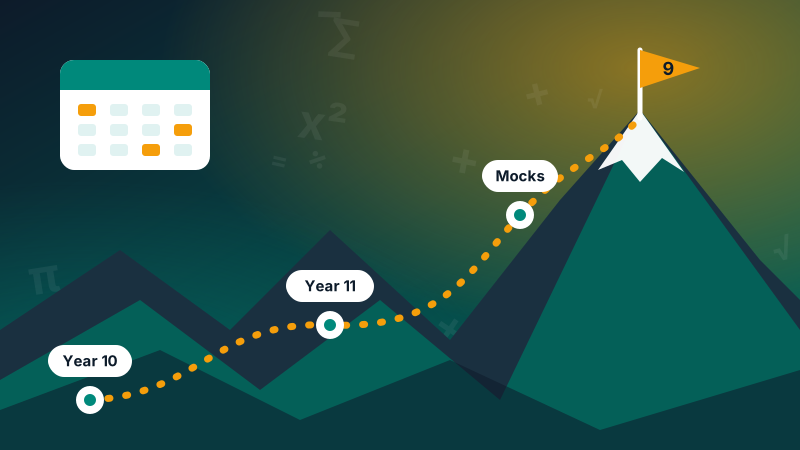
Most students don't fail GCSEs because they're not clever enough. They fall short because they start revising properly in April, when the smart move was starting in September. Here's how to spread the work so exam season feels like a final push, not a panic.
Year 10: build the foundations
Year 10 isn't "the easy year". Roughly half of your GCSE content is taught now, and it all turns up in the exams.
- Keep tidy notes as you go. Summarise each topic in one page the week you finish it. Future you will be grateful.
- Fix gaps immediately. If a topic in Maths didn't click, sort it out that week. Gaps compound.
- Take end-of-Year-10 exams seriously. They're your first honest look at where you stand.
Year 11, September to December: steady revision
- Aim for 3–5 short revision sessions a week alongside homework.
- Start doing past paper questions by topic rather than whole papers.
- Keep a running "weak topics" list. This becomes your revision plan.
January to March: mocks and correction
Mocks usually land between November and February. Treat them as data, not a verdict (see Mock exam results — what they really tell you). After your results, rebuild your weak topics list and give those topics priority.
April to May: full papers under timed conditions
Now switch to full, timed past papers. You'll build stamina and learn how long each question type really takes. Mark every paper with the mark scheme and log every mistake.
During exams: little and often
Between exams, revise the next paper only. Light review the evening before, sleep, repeat.