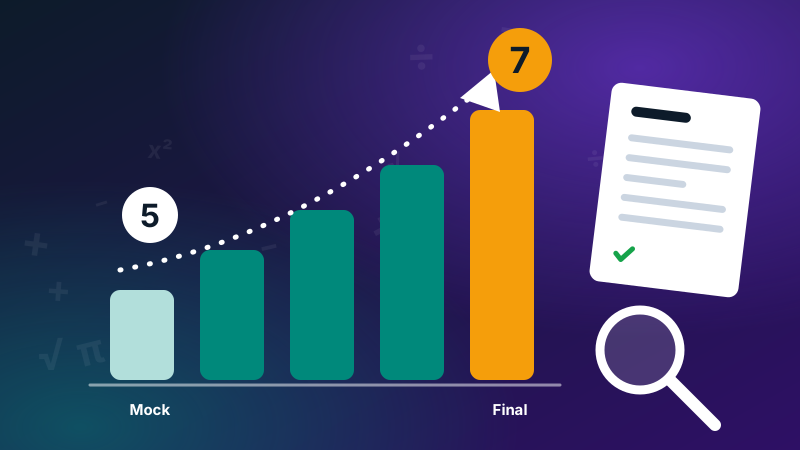
Mock results can feel like the end of the world or a reason to relax. They're neither. A mock is a snapshot of where you are months before the real thing — and the most useful thing about it is the information it gives you.
Why mock grades are often lower than final grades
Mocks are usually sat before all the content has been taught or revised. Many schools also mark strictly on purpose, or use tougher grade boundaries, to avoid complacency. A 5 in a January mock can realistically become a 6 or 7 by summer with focused work.
Why a good mock grade isn't a guarantee
The opposite is true too. Other students will improve a lot between mocks and the summer. Standing still can mean falling behind relative to grade boundaries.
What to actually do with the results
- Get the papers back, not just the grade. Ask teachers if you can see your marked scripts.
- Sort lost marks into categories: didn't know the content, poor exam technique, careless errors, or time pressure.
- Rank topics by marks lost. The top three become your priority for the next month.
- Make a specific plan. "Revise Maths" is not a plan. "Two sessions a week on simultaneous equations and bounds" is.
For parents: how to react
Keep your first response calm and curious. "What surprised you?" opens a conversation. "Why is it only a 4?" closes one. Mocks also matter for predicted grades used in sixth form and college applications, so they're worth taking seriously — but not worth a meltdown.