"Have you revised today?" might be the least effective sentence in the English language. You care, and you want to help — but constant check-ins often lead to arguments and less revision, not more. Here's what actually works.
Agree the plan together, then step back
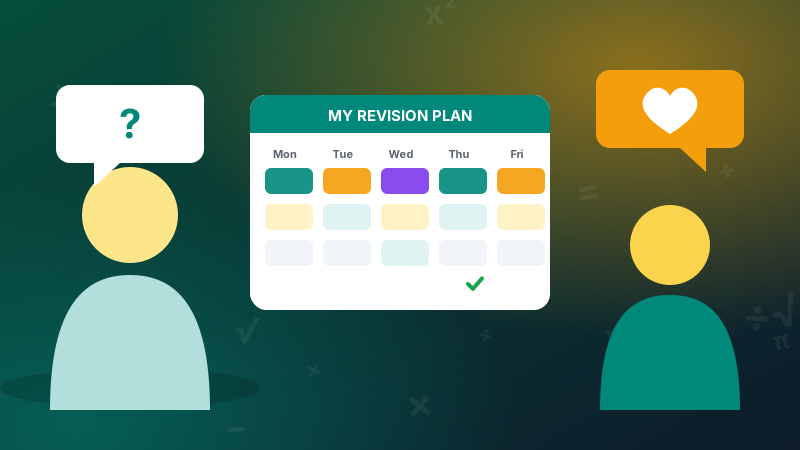
Sit down once, early in Year 11, and agree a weekly revision timetable with your teen. Let them lead it. When the plan is theirs, you're no longer the enforcer — you're just asking, "How's the plan going?" once a week.
Ask better questions
Swap "Did you revise?" for questions that get real answers:
- "What topic are you finding hardest at the moment?"
- "What did you get wrong on that practice paper?"
- "Can you explain that to me?" (Teaching a topic is a brilliant revision technique.)
Get the environment right
A clear desk, decent light and — the big one — phones out of the room during revision sessions. You might need to agree a household rule so it doesn't feel personal. Some families put all phones in a basket during study time, parents' included.
Look after the basics
Sleep, food and exercise affect grades more than most parents realise. Teenagers need roughly 8–10 hours of sleep. A late-night scrolling habit can undo a good day's revision.
Praise effort, not just results
A 5 earned through consistent hard work deserves as much credit as a 7. Praising effort keeps motivation going when progress feels slow.
Know when to get outside help
If your child is stuck on the same topics after months of trying, or arguments about school are damaging your relationship, a tutor can take the pressure off everyone. You get to go back to being the parent.