Feeling nervous before exams is normal, and a bit of adrenaline can sharpen your focus. Problems start when worry takes over your sleep, your revision, or your mood for days at a time. Here's how to keep nerves useful rather than overwhelming.
For students
Break it down. "GCSEs" feels enormous. "Two past paper questions on circle theorems tonight" feels doable. Small, specific tasks reduce the sense of being overwhelmed.
Prepare for the exam room, not just the content. Timed papers at home make the real thing feel familiar. The less unknown there is, the less there is to fear.
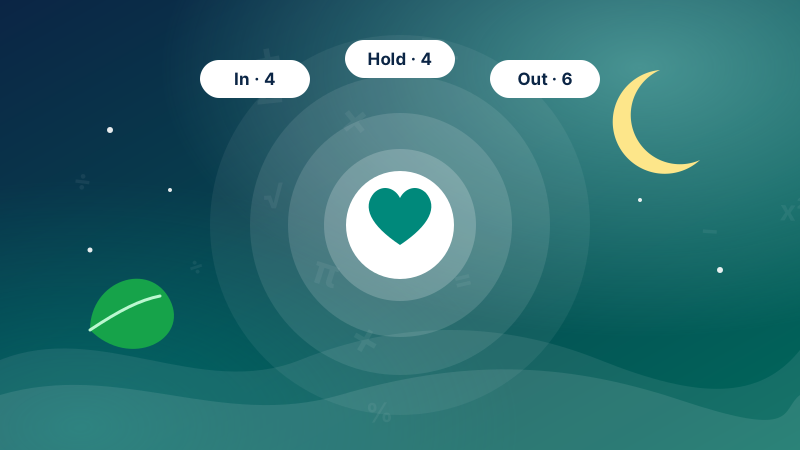
Use a breathing reset. If panic hits mid-exam, put your pen down and breathe in for four counts, hold for four, and out for six. Do it three times. Then move to a question you know you can answer to rebuild momentum.
Protect your sleep. A tired brain remembers less and worries more. Stop revising at least an hour before bed and keep your phone out of the bedroom.
Keep doing things you enjoy. Sport, music, seeing friends — these aren't distractions, they're what keep you going for the long haul.
For parents
- Listen before you fix. Sometimes your child just needs to vent. "That sounds really stressful" can help more than a solution.
- Keep perspective. Remind them that there are routes forward whatever happens, including resits and alternative courses.
- Watch for warning signs that go beyond normal nerves: persistent trouble sleeping, not eating, withdrawing from friends, or talking about feeling hopeless.
When to get more help
If stress is lasting weeks or stopping your child from functioning day to day, talk to their form tutor or school pastoral team, or your GP. Young people can also contact Childline on 0800 1111, and YoungMinds has guidance for both teens and parents.