The hard work is done by the night before an exam. What you do in the last 24 hours won't teach you a new topic, but it can make sure you show everything you already know.
The night before
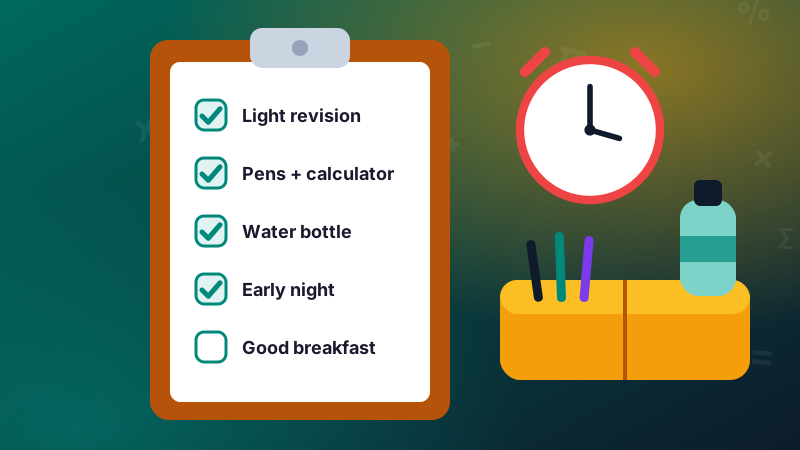
- Light review only. Flick through your summary notes or flashcards for 30–60 minutes. No new topics.
- Check the timetable. Confirm the date, start time (morning or afternoon), room and paper number.
- Pack your bag: black pens (at least two), pencil, rubber, ruler, and a clear pencil case.
- Maths and Science extras: calculator (check the battery), protractor and compasses.
- Water bottle with the label removed, if your school requires it.
- Screens off an hour before bed, and aim for a normal bedtime.
The morning of
- Eat a proper breakfast — slow-release food like porridge, eggs or toast keeps energy steady.
- Leave early enough to arrive with time to spare.
- Avoid last-minute cramming with anxious friends outside the hall. Panic spreads.
- Phone and smartwatch switched off and handed in, or left at home. Having one on you, even switched off, can lead to disqualification from that paper.
In the exam room
- Read the instructions on the front cover. Check how many questions to answer.
- Skim the paper first. Spot the questions you're confident on.
- Use marks as a time guide. Roughly one minute per mark is a useful rule in many papers.
- Don't get stuck. If a question beats you after a couple of minutes, mark it and move on. Come back at the end.
- Use every minute. If you finish early, check your working, units and whether you've answered every part.
For parents
Keep the morning calm and practical. A good breakfast, a lift if possible, and a simple "You've prepared for this" is all that's needed. Save the post-exam debrief for later — and don't let one tough paper define the whole summer.
The takeaway: a calm routine protects all the work you've already done.